According to the Food and Agriculture Organization reports, people will need to grow 60 percent more food to support a world population of 9.3 billion by 2050.
With the challenges the farm industry faces now, using traditional farming methods may not be enough. This could also increase the strain we already place on our natural resources.
This is where Artificial Intelligence can help. The market for AI in agriculture is expected to grow from 1.7 billion in 2023 to 4.7 billion by 2028. This article will explore three major challenges that agriculture is dealing with today and illustrate how technology and AI are helping to solve them with examples.
Benefits of AI in Agriculture
Farming has evolved a great deal over the past few years as a result of new technological developments. These changes are crucial because we face large-scale problems like climate change, more people to feed, and fewer natural resources. AI can help solve many of these problems and make farming better and more efficient.
Making Better Decisions with Data
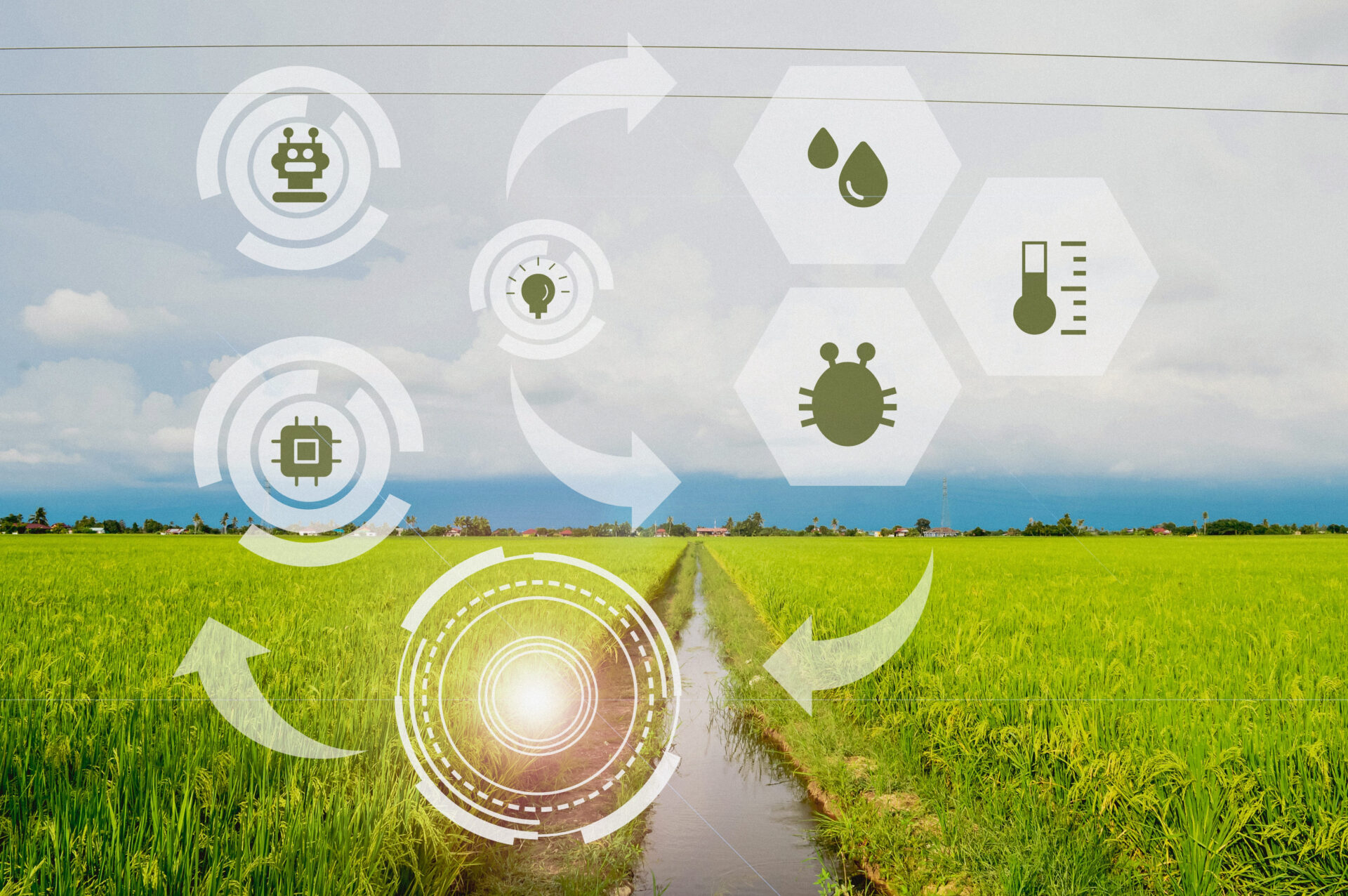
Today, data is everywhere. AI tools can collect and study this data quickly. With this information, farmers can better understand market needs, guess future prices, and decide the best time to plant or harvest. AI also helps check soil health, monitor the weather, and give advice on when and how much fertilizer or pesticides to use.
In addition, farm management software helps farmers work smarter, grow more, and earn more.
Saving Money
Farmers always try to grow more while spending less. With AI, they can do just that. It helps them use fewer resources like water, fertilizers, and pesticides while still getting better results. AI also helps decide which parts of a field need extra care, so nothing is wasted.
New methods like vertical farming can also grow more food in smaller spaces. This means better crops, less chemical use, and higher profits with lower costs.
The Power of Automation
Farming is hard work, and finding enough workers is often challenging. Automation addresses this issue by utilizing machines. In the past, machines replaced a significant amount of labor. Now, digital tools are introducing the next big transformation.
Examples include autonomous tractors, smart watering systems, drones for checking crops, and robots for picking fruits and vegetables. These AI tools work faster and more accurately than people, helping farms run better and with less effort.
Major Challenges Farmers Face
Among the many problems in the agricultural sector, these three stand out because they affect people worldwide and have a significant financial impact.
Pests
They destroy about 40% of the world’s agricultural output each year, which costs at least $70 billion. From taro caterpillars that wipe out soybean crops to tobacco whiteflies that harm tomatoes, the effects are widespread and the financial losses are huge.
Soil Quality and Water Use
Poor soil quality affects nearly 33% of the Earth’s soil. This makes it harder to grow crops and leads to losses of around $400 billion. Water shortages and inefficient irrigation also hurt farming. Farming uses 70% of the world’s available freshwater, but 60% is wasted because of leaky irrigation systems.

Weeds
Weeds significantly reduce crop yield and quality even when using modern farming methods. About 1,800 types of weeds lower plant production by around 31.5%, which results in economic losses of about $32 billion annually.
How AI is Changing Farming
In farming, AI involves gathering data, using tools like computer vision and geospatial analytics, and applying methods like machine learning.
Here are examples of how AI is solving key farming problems:
Finding and Controlling Pests
AI helps farmers quickly identify and control pests. It uses data like weather reports, historical pest patterns, and images from drones or satellites.
For example, a device by Trapview traps pests using pheromones, takes pictures, and uses AI to identify them. With its database, the system recognizes over 60 pests, such as the codling moth and the cotton bollworm.
Then the device maps pests’ potential spread using weather and location data. Farmers receive alerts on an app, allowing them to act quickly. This saves money, cuts chemical use, and reduces crop loss. Trapview users report a 5% increase in crop yield and €118 million in total cost savings.
Checking Soil Health
Monitoring soil health is important for growing crops efficiently. AI uses data from sensors, satellites, and farm equipment to analyze soil conditions like moisture and nutrients.
CropX has created a platform that uses real-time data to help farmers understand soil conditions and crop performance. It measures soil moisture, vegetation growth, and other factors to improve farming strategies.
CropX users report cutting water use by 57%, reducing fertilizer use by 15%, and boosting crop yields by up to 70%.
Weed Control
AI-powered drones and robots can identify and remove weeds with great accuracy, reducing competition for resources between crops and weeds while limiting herbicide use.
Carbon Robotics uses computer vision and robotics to detect and remove weeds. Its LaserWeeder scans fields with over 42 high-resolution cameras and uses lasers to kill unwanted plants.
This system can clear up to two acres of weeds per hour with 99% accuracy. Farmers say they lower weed control costs by up to 80% and see a return on investment in one to three years.
Watch this video from Microsoft showing the future use of Artificial Intelligence and Farming.
Making Irrigation Systems Smarter
AI helps farms water their crops more efficiently. When used with special sensors that check soil moisture and weather, AI can decide exactly how much water plants need at any moment. This helps save water and supports eco-friendly farming.
AI also helps spot leaks in irrigation systems. By studying water flow and pressure data, AI can find unusual changes that may point to a leak. Machine learning models learn to recognize the signs of a leak and alert farmers right away. This early warning prevents water waste and protects crops from damage.
In addition, AI monitors weather conditions and how much water crops need, so it can detect areas where too much water is being used. By automating watering decisions and leak detection, AI helps farmers use water wisely and protect resources.
How to Safely Transport AI-Powered Farm Equipment
Safety should always be the main focus when transporting agricultural equipment, especially expensive AI-powered machines. Improper transportation can lead to costly damage, accidents, and injuries. However, with the appropriate strategy, you will ship your valuable tools without any trouble.
- Choose a reliable freight forwarder with a lot of experience in agricultural equipment shipping. They must be familiar with local regulations where you transport your machine, prepare the necessary documentation, and know how to map out the route to avoid delays. Some offer extra services like disassembly and container loading, customs brokerage, and fumigation.
- Use appropriate tie-downs, chains, or straps to secure your equipment. Make sure it is stable and will not shift during transport.
- Small drones or robots can usually fit into one container and be shipped together. However, larger equipment like tractors and combines often need to be transported individually due to their size and weight and to prevent damage.
- Obtaining insurance is a great idea as it can protect your equipment from unexpected problems such as theft, natural disasters, and even mechanical breakdowns.
The Risks of Using AI in Agriculture
AI brings many benefits to farming, but it also comes with challenges that need attention, such as job loss, inequality, and ethical concerns. Data privacy issues emerge as AI systems collect vast amounts of sensitive farm information, potentially exposing farmers to security vulnerabilities and corporate exploitation.
Additionally, there’s a growing risk of environmental damage if AI optimization focuses solely on productivity metrics without properly accounting for long-term ecological sustainability and biodiversity preservation.
Job Loss
As AI takes over more tasks that used to be done by people, it can lead to fewer jobs on farms. While automation can make farming more efficient, it may reduce the need for human workers, leading to unemployment in rural areas where job options are already limited.
Widening Inequality
Advanced technologies often come at a high price. This means that most large companies or wealthy farm owners can afford it. Smaller farms with fewer resources may struggle to keep up, leading to a bigger gap between big and small producers.
Data Privacy Concerns
Modern farms are using more data than ever before. But as it becomes more valuable, important questions arise: Who owns this data? Who may use it? There is a risk that private data could be shared without permission, leading to serious privacy concerns.
Frequently Asked Questions
How is AI helping farmers increase crop yields?
AI analyzes real-time data from sensors, drones, and satellites to help farmers monitor soil health, detect pests, and optimize irrigation. This allows for more precise farming, resulting in higher crop yields with fewer resources.
What are the main agricultural challenges AI addresses?
AI is used to control pests, poor soil quality, inefficient water use, and weed overgrowth. These issues significantly impact global food production and result in billions of dollars in losses annually.
Can AI farming tools help small-scale farmers?
While AI offers major advantages, smaller farms may face high implementation costs. However, as technology becomes more accessible, lower-cost AI tools and platforms are emerging to support smaller producers.
What are some examples of AI-powered equipment in agriculture?
Examples include autonomous tractors, drones for crop monitoring, smart irrigation systems, and robots like the LaserWeeder that identify and eliminate weeds using computer vision and lasers.
Are there risks involved with using AI in farming?
Yes. Key risks include job displacement due to automation, increased inequality between large and small farms, and concerns over data privacy. Addressing these issues is crucial for ethical and inclusive AI adoption.
Conclusion
Artificial Intelligence is revolutionizing farming practices while building a foundation for sustainable and resilient agriculture. It optimizes every stage of crop growth, from choosing the right seeds to harvesting and storage.
By analyzing real-time data, AI can adapt farming techniques to changing weather and other challenging conditions, ensuring crops remain healthy and productive. This ability to manage processes helps farmers maximize yields while promoting long-term sustainability.
References
UN.org: Feeding the World Sustainably
McKinsey & Company: From bytes to bushels: How gen AI can shape the future of agriculture
IBM: AI and the future of agriculture
World Economic Forum: Artificial Intelligence for Agriculture Innovation