Car-free living used to feel like a lifestyle reserved for those who lived in the very heart of a well-connected city, like London or Amsterdam. Now, it seems to be becoming a far more realistic option for millions around the world.
As the population begins to pay more attention to sustainability and the climate change fight, people are starting to wonder why we give so much space, time, and money to our vehicles, electric or otherwise.
People aren’t suddenly feeling more love for buses and trains; they are seeking less expensive, less time-consuming, and more ways to travel efficiently. Technology is always improving, and as public transport becomes faster, smarter and more seamless, this shift will continue.
From tap-and-go payments to real-time route optimization, the shift is not just about transport; it’s about people’s evolving attitudes towards a world that doesn’t always require a car for every single trip out of the house.
With technological improvements in hand, we’re going to take a look at how cities are modernizing and giving us the option to go car-free. Let’s dive in.
Keep People Moving: Make Paying Simple
One of the key pain points in public transport is ticketing and taking payment.
Buses stop for longer as people pay cash, trains are missed as ticket machines develop queues, and bottlenecks form in crucial zones like ticket gates, stopping the free movement of people.
Thankfully, technologies like automated fare collection, or AFC, systems are transforming the way people move through cities by eliminating the need to stop and pay. No queues, no paper tickets, no confusion over zones or fares, no tourists having the wrong ticket for the wrong mode of transport.
Instead, passengers can simply board their transport of choice, and the payment will sort itself. Built-in passes on our phones, special cards for particular modes of transport, tap to pay systems, and other types will keep people moving, keep costs down, and ensure ease for all users.
It may sound like a small change, but automated paying has a gigantic impact; just look at London, a city that offers pay-as-you-go systems throughout its network. It’s a system used 26.6 million times per day and is regarded as one of the best in the world.
The result of automated ticketing? Public transport becomes a natural part of any journey, rather than a troublesome inconvenience.
Real-Time Data & Citywide Movement
Behind every journey is a data set, and this data is analyzed by the latest technology and used to implement strategies to improve systems, routes, options, and services.
As you can imagine, in a bustling city center, this is an awful lot of data and therefore, offers an awful lot of potential, and a lot of power to process it. But what happens with all that information?
In the past, not much. But now it’s not just data being stored by computer techs in an office somewhere; it’s data that can help you on your journey.
Increasingly, cities around the world are investing in real-time transport data, allowing the user to pinpoint their chosen mode of transport and calculate their journey time as they move through the city.
This reduces wait times, improves reliability, prevents overcrowding, and most importantly, places a lot more control in the hands of the day-to-day users.
Research from the World Bank also highlights that live data analysis and digital transport systems are helping cities to reduce congestion whilst improving overall service and performance. It really is a win-win.
It’s no longer about simply getting from A to B; it’s about knowing you’ll get there in good time and using technology to empower the public to make decisions that benefit their journey.
Mobility: One Connected Experience
One barrier that constantly presents itself to a completely car-free system is fragmentation.
Different systems that use different tickets, multiple websites that control different elements, apps that do this, that, and the other, with none communicating with the other. It’s hard for people to use, and hard for authorities to maintain.
But that’s all changing, fast.
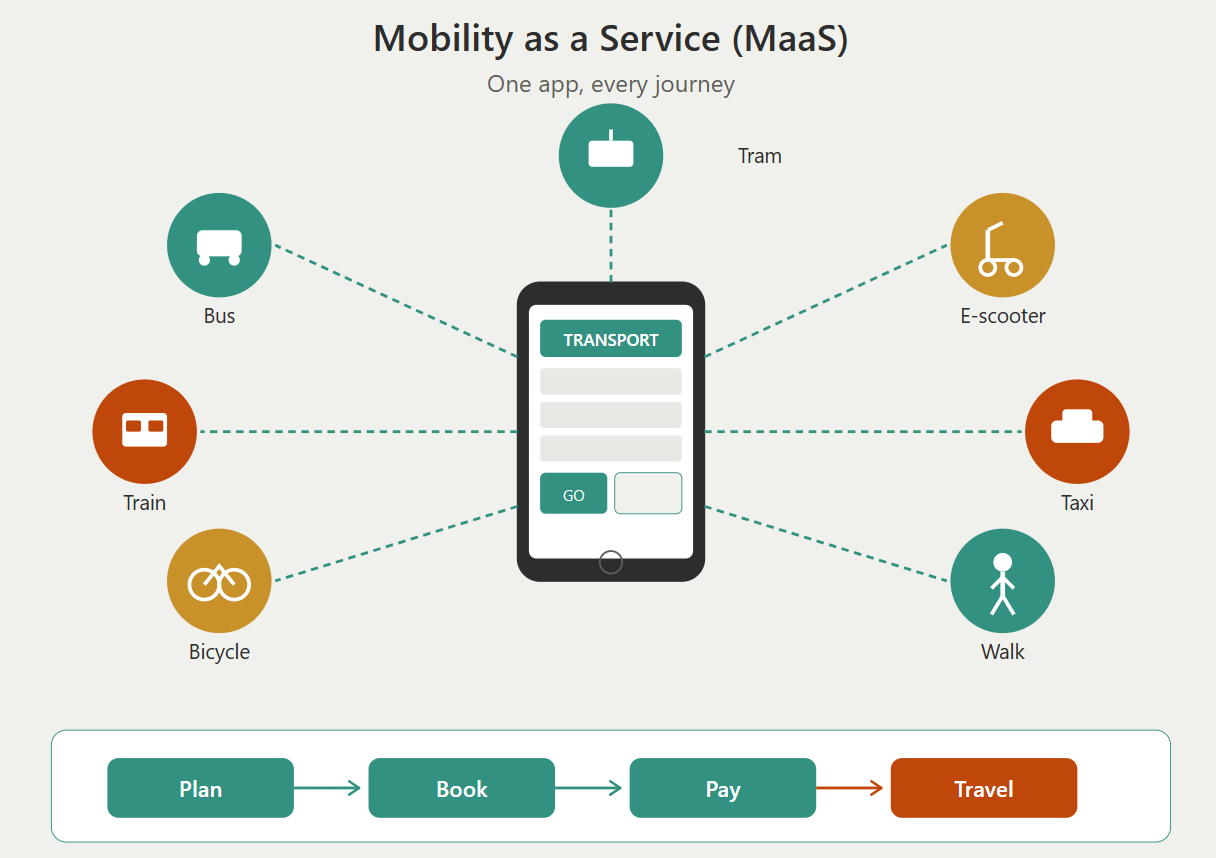
Mobility-as-a-service, or MaaS, systems are bringing together buses, trains, bikes, e-scooters, taxis, trams; you name it.
Giving these elements a unified interface where users can plan, book, and pay for their journey in one place, then monitor the real-time data of their journey as it happens, is vital when switching to a car-free society.
This level of integration allows public transport to actually compete with the car.
People are placed in control, expensive systems are stripped back and made affordable, and governments can actually maintain quality instead of constantly putting out fires.
According to the European Commission, MaaS solutions are central to reducing congestion and emissions in major cities, so utilizing them should be a real priority.
When everything works together, the system becomes far more appealing and the people are the ones who benefit.
Cleaner Transport is Driving The Shift
Car-free living is no longer some distant utopian dream; it’s an urgent reality that we need to realize, and soon.
We must figure out a way to control the emissions generated by urban areas, particularly in extreme cases like Beijing, where smog shrouds the city.
Urban transport is one of the largest contributors to urban emissions, and going car-free would help with this. There is, however, much more that could be done when you consider trains, buses, taxis and other forms of transport also emit their own carbon.
Cities taking their emissions seriously are responding with cleaner alternatives like:
- Electric or hydrogen-powered buses
- Expanded cycling infrastructure (more on this below)
- Electric tramways
- City bikes and scooters
- Electric taxis
- Low-emission zones
- Pedestrian-first urban planning
Only with the combined power of elements like these can we begin to tackle the problem of air pollution on a global scale.
Check out this video on how cities around the world are tackling the problem with innovative, pedestrian-driven change:
Pedal Power Could Change Everything
Pedal Power Could Change Everything
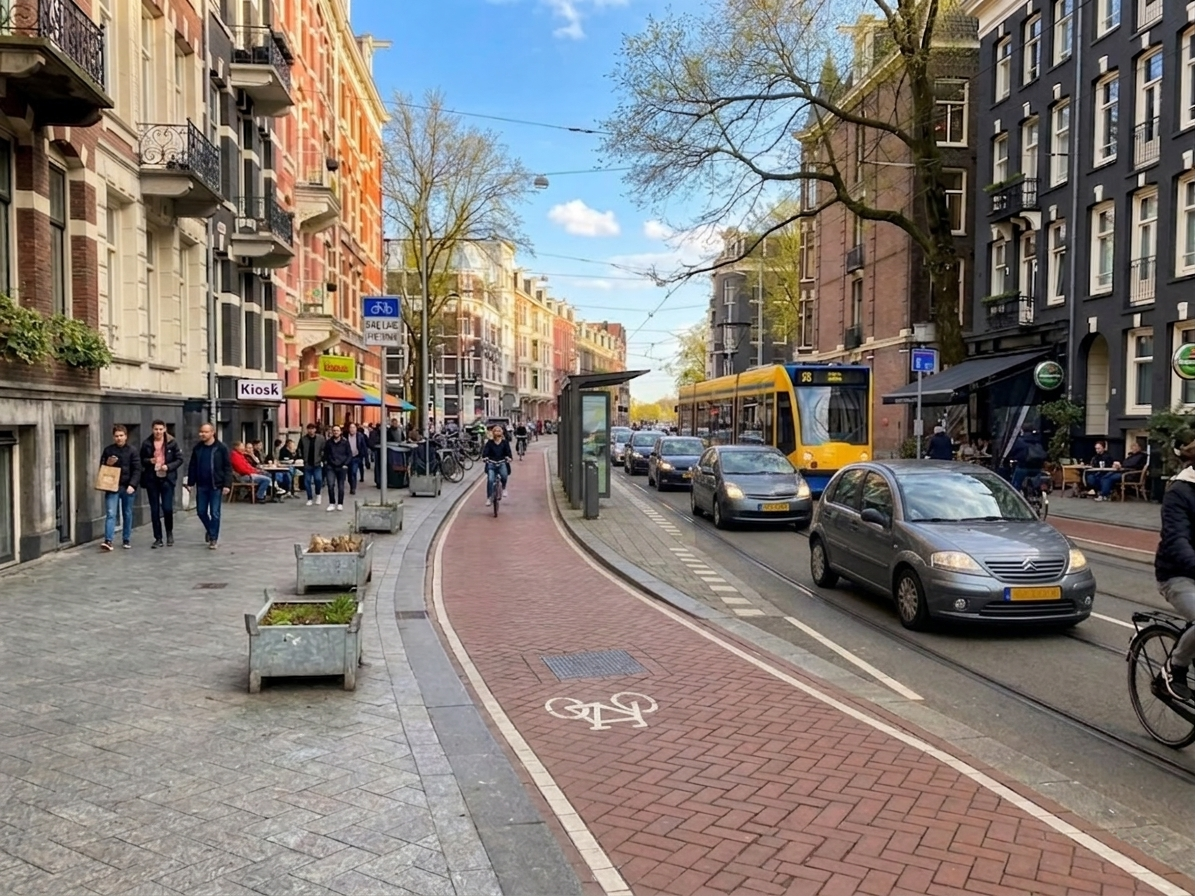
If there’s one thing that could instantly shift the outlook in any city, it’s good cycling infrastructure.
Not simple painted cycle ways on the road. Not bike lanes squeezed into existing car lanes. We need proper, protected cycle lanes that cover a wide area efficiently and safely.
E-bikes are making cycling more appealing by removing the fitness barrier. Now, the main obstacle stopping people from swapping car trips for bike trips is safety.
No one wants to ride alongside angry motorists, double-decker buses, and rogue pedestrians. A pleasant experience can become a nightmare very quickly.
There are plenty of cycling initiatives around the world. But if we want a real shift in habits, things need to go further than simple cycle routes.
- We need bike-dedicated pathways that remove cars from the equation.
- We need signals that let bikes pass through intersections safely.
- We need secure storage at destinations.
These practical steps must come before cycling becomes a genuine alternative.
The fascinating part? Cycle lanes don’t replace public transport systems. They complement them whilst removing cars from the road.
The right infrastructure solves the “first and last mile problem” completely. People can move quickly from stations to doorways without relying on cars. Combine this with cycle schemes, app-powered rental bikes, and instant payments. You have a complete A-to-B system.
Making cycling safe and enjoyable will encourage more people to ride. It will take cars off the road. It will fill the gaps left by even the best public transport systems.
And just like that, we’re heading towards car-free living.

The Future is Frictionless
So there you have it; car-free living is not impossible, but it will take a lot of work.
Many of the world’s cities are already in a place where they are seeking to reduce the number of cars swarming their streets, but without the help of the latest technologies, change will be difficult.
Making the most of automated systems like fare collection, utilizing data to empower travelers, and allowing people to make the choice by offering genuine alternatives, is the best way to reduce cars in metropolitan areas.
Cities like Barcelona, Paris, London, and Oslo are all making big changes, and the rest of the world will wait for the results with bated breath.
One thing we can all agree on is that our carbon footprints could do with a bit of car-free living.
References
LittlePay.com: How Automatic Fare Collection Can Improve Public Transport
Transport for London: Travel in London 2025
Worldbank: Transport
European Commission: Urban Transport
ScienceDirect: Disentangling the behavioural side of the first and last mile problem: the role of modality style and the built environment