


Energy management systems have become essential tools for businesses and organizations looking to reduce energy costs, improve operational efficiency, and minimize their environmental impact. This is just one of the many ways companies today are taking on green building trends and making workspaces more sustainable.
A wide variety of energy management tools are available, providing in-depth and precise energy monitoring across countless applications. It can be difficult to decide which solution best suits your needs.
Today, we’re covering the best energy management systems on the market and why you need them.
What Are Energy Management Systems (EMS)?
Energy Management Systems (EMS) represent a sophisticated framework designed to monitor, control, and optimize energy consumption within a building, facility, or even an entire organization.
At its core, an EMS integrates hardware, software, and communication technologies to provide real-time insights into energy usage patterns. This comprehensive approach allows businesses to identify inefficiencies, implement corrective actions, and ultimately reduce operational costs while minimizing their environmental footprint.
Modern energy management systems go beyond simple metering. They leverage advanced analytics, machine learning, and automation to predict energy demand, optimize equipment schedules, and respond dynamically to changing conditions, such as fluctuating energy prices or renewable energy availability.
By centralizing energy data, an EMS empowers decision-makers with the information needed to make informed choices about energy procurement, conservation, and sustainability initiatives. Implementing an effective EMS is a strategic step towards achieving greater energy independence and meeting corporate sustainability goals.
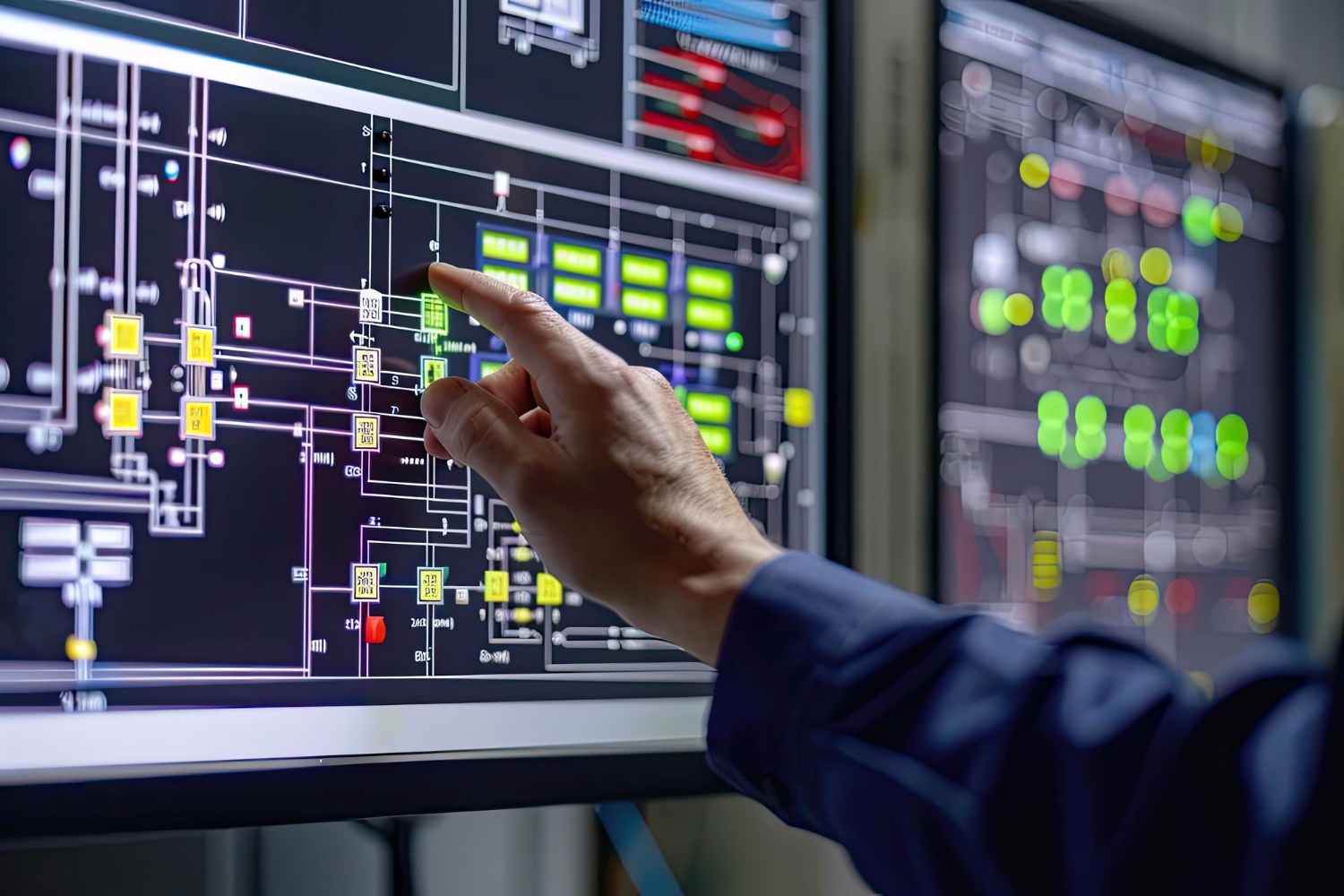
Energy Management & Technology
Energy Management is widely applicable across various industries. By leveraging software-based solutions, companies and renewable energy consultants can streamline their operations, boost productivity, and promote sustainable practices.
Most energy management programs utilize digital technology. A good example is utility tracking software, which predicts future energy usage and plans energy budgets.
This is certainly a valuable tool for decision-makers to ensure that their energy management strategy meets their objectives and financial planning.
Energy management software uses IoT, advanced connectivity, and big data.
This not only enables a corporation to take advantage of energy data analytics to improve energy management but also mitigate its many challenges.
One should not confuse this broad energy management description with energy efficiency despite the overlaps between the two fields.
EMS has many areas of application that include commercial and industrial properties, residential buildings, and municipalities.
Applications analyze real-time data as well as individual asset information to calculate ways to improve energy usage.
Here is a video by Fortree Power with an overview of EMS:
IoT Integration
The Internet of Things (IoT) is transforming energy management by enabling unprecedented levels of data collection and control. Smart sensors integrated into various devices and systems provide real-time monitoring of energy consumption, environmental conditions, and equipment performance.
In industrial settings, IoT sensors can detect inefficiencies in manufacturing processes, allowing for immediate adjustments to optimize energy use. In commercial buildings, occupancy sensors can automatically adjust lighting and HVAC systems based on real-time usage patterns.
Smart grids utilize IoT devices to balance energy distribution more effectively, integrating renewable sources and responding to demand fluctuations.
These IoT applications not only improve energy efficiency but also enable predictive maintenance, reducing downtime and extending equipment lifespan across industries
Steps in Energy Management
Energy management can be divided into four steps that produce value for suppliers and consumers alike:
1. Transparency
The initial step in any EMS project involves monitoring energy and analyzing the current state of the energy supply. The analysis is usually presented through numerical data and graphic visualizations.
These comprehensive reports offer a detailed and transparent insight into energy usage.
2. Optimization
Optimization derives from energy monitoring results, often consisting of a one-off measure like improved consumer metering or component replacements.
These measures translate to increased energy efficiency and lower overall costs.
Apart from reducing the total energy consumption, other goals are also fulfilled such as technical and regulatory requirements.
Examples include the minimum and maximum operating times of equipment or the optimization of grid charges.
3. Management
At the management level, electricity consumers, producers, and suppliers are analyzed to calculate economic or ecological peak efficiency.
Management measures differ from optimization measures as they are generally repeated and often automated.
Modern energy management incorporates conflicting goals into the management of components to achieve an overall optimum.
4. Grid & System Integration
In short, integration involves a property that is continuously managed by an energy management software and optimized in the local or national energy market.
For example, energy procurement can become more flexible and automated to reduce energy procurement costs.
The integration of “flexible properties” into the electricity market offers financial benefits for the property user. It also has an overall increased macro-economic benefit for society.
What Does Energy Management Software Do?
Energy management solutions can include software and hardware components. They may encompass a range of devices, such as smart meters, sensors, and controllers, that work together with analytical software platforms.
Energy Management Software (sometimes known as Energy Efficiency Software) is able to track and manage energy usage:
- Real-time meter monitoring
- Controls for the consumption of energy for heating and cooling systems in real-time
- Energy usage monitoring and dashboards
- Sustainability and carbon usage reporting
- Create analytics based on energy consumption, make predictions, and devise energy-saving strategies.
- Take automated actions to cut energy usage
- Generate reports
- Manage on-site energy generation, energy storage, and electric vehicle (EV) charging
These systems are designed to monitor, manage, and ultimately reduce energy consumption while amplifying energy savings across the board.
Energy software solutions have a variety of features:
1. Monitoring
The core feature of energy management software is real-time monitoring which translates consumption levels into data.
Information is typically gathered from a variety of sources, such as utility meters, IoT devices, weather stations, and various sensors.
Software solutions perform advanced analytical to build accurate trends for power consumption, emissions, expenses, etc.
This information can then be used by companies as a yardstick for future energy-saving and sustainable initiatives.
2. Engaging
Using software to monitor real-time energy usage enables immediate notifications about consumption spikes or other anomalies.
The system can then take manual or automated actions to lower or streamline energy consumption.
A system connected to a larger grid contributes to reducing energy consumption and spending by dimming lights during off-hours. It can also help businesses to save and distribute surplus energy.
Software solutions provide instant feedback on how these actions affect energy usage and costs.
3. Reporting
Collecting data to compile reports is one of the key functions of industrial energy management software.
This software can save hundreds of hours filing reports and calculating complex formulas to identify the company’s environmental impact.
Analytics help users visualize different factors that affect their energy usage.
From this, energy efficiency strategies can be developed to gauge and monitor their effectiveness.
Core Components of an Effective Energy Management System
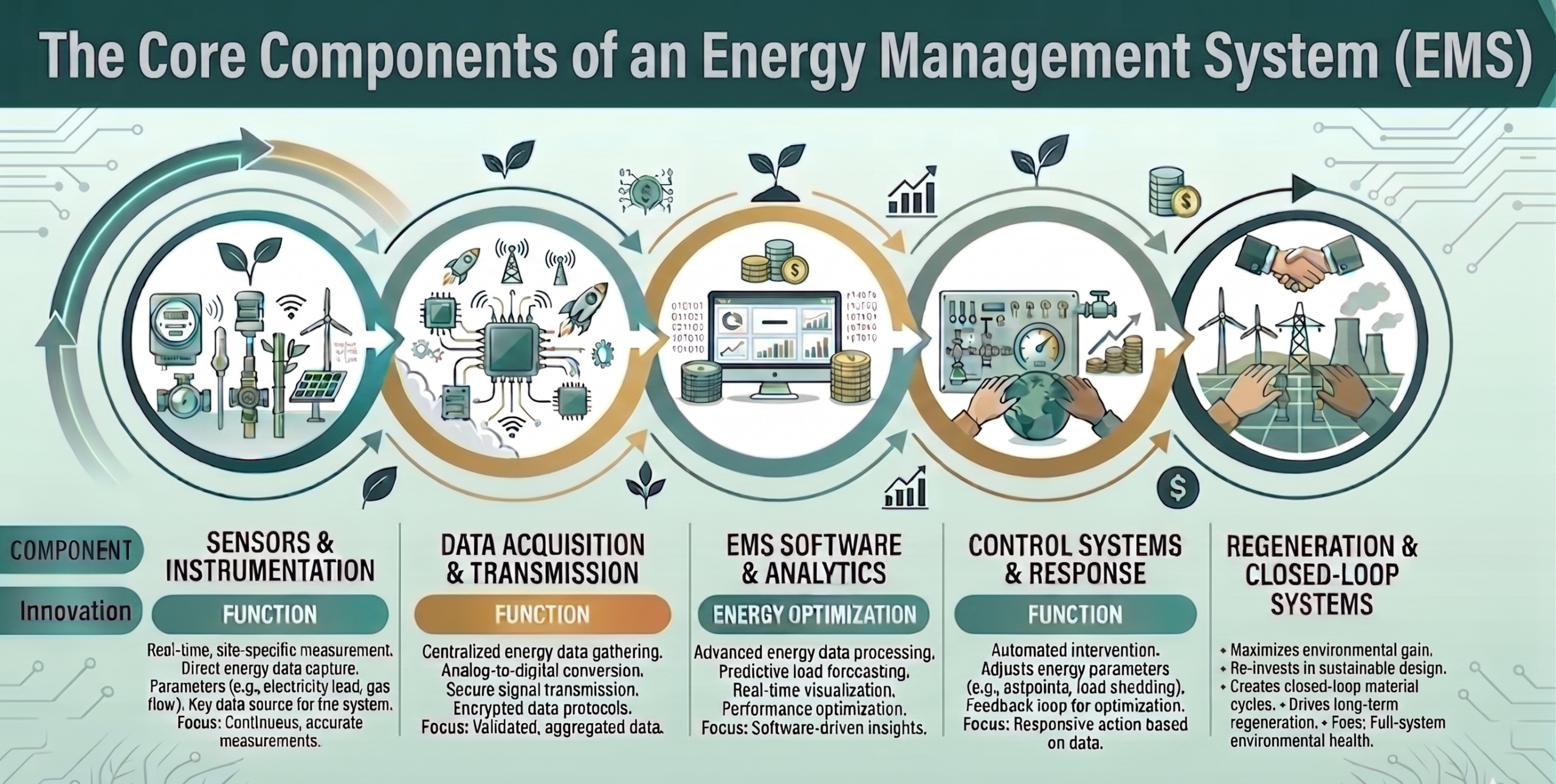
An effective energy management system is not a single piece of technology but rather an integrated suite of components working in concert. Each element plays a vital role in collecting data, processing information, and enabling intelligent control over energy usage. Understanding these core components is key to appreciating the complexity and capability of a modern EMS.
Typically, an EMS comprises:
Sensors and Meters: These are the foundational data collectors, measuring electricity, gas, water, temperature, humidity, and other environmental factors. Smart meters provide granular, real-time data crucial for accurate monitoring.
Data Acquisition and Communication Infrastructure: This layer collects data from sensors and meters and transmits it to a central processing unit. It often involves wired or wireless networks, gateways, and data loggers to ensure reliable data flow.
Centralized Software Platform: The brain of the EMS, this software aggregates, stores, and analyzes all incoming data. It provides dashboards, reporting tools, and visualization capabilities, allowing users to monitor performance, identify trends, and detect anomalies.
Control Systems and Actuators: Based on the analysis from the software platform, these components execute commands to adjust energy-consuming equipment. Examples include smart thermostats, lighting controls, HVAC system adjustments, and power distribution units.
Analytics and Reporting Tools: These features leverage historical and real-time data to generate insights, predict future consumption, and create customizable reports on energy performance, cost savings, and carbon emissions. Advanced analytics often include machine learning algorithms for predictive maintenance and optimization.
Key Benefits of Implementing Energy Management Systems
Adopting energy management systems offers a multitude of advantages for businesses across various sectors. These benefits extend beyond mere cost savings, impacting operational efficiency, environmental responsibility, and long-term strategic planning. Understanding these advantages is crucial for recognizing the transformative potential of a well-implemented EMS.
Here are the primary benefits:
Reduced Operational Costs: By identifying and eliminating energy waste, an EMS directly lowers utility bills. Optimized scheduling and control of equipment ensure that energy is consumed only when and where it is needed, leading to significant financial savings.
Enhanced Energy Efficiency: Real-time monitoring and data analysis pinpoint inefficient systems or practices. This allows for targeted improvements, such as upgrading outdated equipment or adjusting operational parameters, leading to a more efficient use of resources.
Improved Sustainability & ESG Performance: An EMS helps organizations reduce their carbon footprint by decreasing overall energy consumption and facilitating the integration of renewable energy sources. This contributes positively to Environmental, Social, and Governance (ESG) metrics and corporate social responsibility.
Increased Reliability & Uptime: Proactive monitoring can detect potential equipment malfunctions or anomalies before they lead to costly downtime. By optimizing energy flow, an EMS can also help stabilize power supply and protect sensitive equipment.
Regulatory Compliance & Reporting: Many regions have strict energy consumption regulations. An EMS simplifies compliance by providing accurate, auditable data and generating comprehensive reports, making it easier to meet legal requirements and demonstrate commitment to energy efficiency.
Types of Energy Management Systems
Energy management systems are not one-size-fits-all solutions; they vary significantly in scope, complexity, and application. The choice of an EMS often depends on the size of the operation, the specific energy challenges, and the desired level of control and automation. Understanding the different types helps in selecting the most appropriate system for a given context.
Common types include:
Building Energy Management Systems (BEMS): These systems focus on optimizing energy use within commercial or large residential buildings. They typically control HVAC, lighting, and other building services to maintain comfort while minimizing energy consumption.
Industrial Energy Management Systems (IEMS): Designed for manufacturing plants and industrial facilities, IEMS address the unique energy demands of production processes, machinery, and complex operational schedules. They aim to reduce energy intensity in industrial operations.
Home Energy Management Systems (HEMS): Catering to residential users, HEMS allow homeowners to monitor and control their energy usage from smart devices. These systems often integrate with smart home appliances and renewable energy sources like solar panels.
Enterprise Energy Management Systems (EEMS): For multi-site organizations or large corporations, EEMS provide a centralized platform to manage energy across an entire portfolio of buildings or facilities. This enables standardized reporting, benchmarking, and enterprise-wide energy strategy implementation.
Microgrid Energy Management Systems: These systems manage energy flow within a localized grid that can operate independently or connected to the main grid. They are crucial for optimizing distributed energy resources, such as solar, wind, and battery storage, within a defined area.
| System | Full name | Primary application | Key features |
|---|---|---|---|
| BEMS | Building Energy Management System | Commercial buildings, offices, retail, hotels, hospitals | HVAC optimisation, lighting control, occupancy-based scheduling, BMS integration, tenant billing |
| IEMS | Industrial Energy Management System | Factories, manufacturing plants, refineries, data centres | Process optimisation, motor/VFD control, demand forecasting, ISO 50001 compliance, production-linked analytics |
| HEMS | Home Energy Management System | Residential homes, smart homes, apartments | Smart thermostat integration, appliance scheduling, solar/battery management, real-time usage display, TOU tariff optimisation |
| EEMS | Enterprise Energy Management System | Multi-site portfolios, corporate campuses, utility-scale operations | Cross-site benchmarking, centralised dashboards, ESG/carbon reporting, procurement strategy, grid interaction |
| 📊 Scale & complexity comparison | |||
| BEMS | Single building | Medium complexity | 10–15% typical energy savings; ROI 2–4 years |
| IEMS | Single facility | High complexity | 5–20% energy reduction; critical for energy-intensive industries |
| HEMS | Single residence | Low complexity | 5–15% bill savings; consumer-friendly interfaces |
| EEMS | Multi-site portfolio | Very high complexity | Portfolio-wide visibility; supports net-zero targets & regulatory compliance |
| 🔌 Typical integrations | |||
| BEMS | BMS/BACnet, HVAC controllers, lighting systems, access control, fire systems, smart meters | ||
| IEMS | SCADA, PLC/DCS, MES, ERP systems, power quality monitors, compressed air systems, steam systems | ||
| HEMS | Smart thermostats, EV chargers, solar inverters, home batteries, smart plugs, voice assistants | ||
| EEMS | Multiple BEMS/IEMS instances, utility APIs, carbon accounting platforms, ERP/finance systems, weather services | ||
Note: Many organisations use combinations — e.g., an EEMS aggregating data from multiple BEMS and IEMS installations across a corporate portfolio. Savings percentages vary based on baseline efficiency, climate, and implementation quality.
Implementing an Energy Management System: A Step-by-Step Approach
Successfully implementing an energy management system requires careful planning and execution. It’s a strategic investment that, when done correctly, can yield substantial returns in energy savings and operational efficiency. A structured approach ensures that the system is tailored to specific needs and integrates seamlessly with existing infrastructure.
Consider these key steps for implementation:
1. Assessment and Planning: Begin with a thorough energy audit to understand current consumption patterns, identify major energy users, and pinpoint areas of waste. Define clear objectives for the EMS, such as target energy reductions or specific sustainability goals. This phase also involves selecting the right EMS solution that aligns with your organization’s scale and requirements.
2. System Design and Integration: Work with experts to design the EMS architecture, including sensor placement, communication networks, and software configuration. Ensure the system can integrate with existing building management systems (BMS), industrial control systems, or other relevant platforms to create a unified energy intelligence hub.
3. Installation and Commissioning: Install the necessary hardware, including meters, sensors, and control devices. Configure the software platform, set up dashboards, and establish reporting parameters. Thorough commissioning ensures all components are communicating correctly and the system is operating as intended.
4. Monitoring, Analysis, and Optimization: Once operational, continuously monitor energy data through the EMS. Use the analytics tools to identify trends, detect anomalies, and measure performance against your objectives. Regularly review reports and use insights to make informed decisions for ongoing optimization, such as adjusting schedules or fine-tuning control algorithms.
5. Training and Maintenance: Provide comprehensive training to staff who will be interacting with the EMS. Regular maintenance, including software updates and hardware checks, is essential to ensure the system remains effective and provides accurate data over its lifespan. Continuous improvement is key to maximizing the long-term benefits of your energy management system.
11 Best Energy Management Systems to Use in 2025
There are a multitude of options for energy management systems, and many will meet your requirements. But which software will be ideal for your company and help to reduce your energy costs and carbon footprint?
Here is our list of EMS top achievers:


Pros & Cons of Energy Management Systems
The Benefits of Using Energy Management Systems
Improves energy efficiency: Energy management tools enable businesses to reduce their energy consumption by allowing the adjustment of consumption based on real-time data collected by monitoring devices.
Provides live data collection: Real-time energy consumption information aids managers in drafting and implementing energy policies via energy control systems focused on optimization.
Cloud-based energy management systems streamline energy data collection and provide easy access to that data.
The Challenges of Energy Management Systems
Energy management systems rely on complete and accurate real-time data collected from all energy-consuming components of a business. All energy-reliant components must have an internet-connected sensor or device to transmit data to the energy management solution.
Security is a leading concern for any organization with a multitude of internet-connected devices. An EMS typically connects to many different energy-consuming devices, which may expose the company to potential security breaches.
Security measures should be part of the initial energy management deliberations to address this concern. This will provide a robust and secure solution to mitigate potential risks after implementation.
Regulatory Landscape
Carbon Pricing Mechanisms
Carbon pricing has become a key policy tool, with 24% of global emissions now covered by carbon taxes or emissions trading systems (ETS). The European Union’s Carbon Border Adjustment Mechanism, currently in a transitional phase, is encouraging governments to
Energy Efficiency Standards
Many countries have implemented or tightened energy efficiency standards:
- The European Union adopted the revised Energy Performance of Buildings Directive in May 2024, mandating zero-emission new buildings by 2030 and introducing Minimum Energy Performance Standards (MEPS) for non-residential buildings
- The United States updated standards for passenger cars in 2024, setting a 2% increase in Corporate Average Fuel Economy (CAFE) targets for model years 2027 through 2032
- China issued a 2024-2025 Energy Conservation and Carbon Reduction Action Plan, targeting a 2.5% improvement in national energy intensity for 2024, with a higher goal of 3.5% for large-scale industries
Reporting Requirements
Many jurisdictions now require businesses to report on their energy use and emissions:
- In the UK, the Minimum Energy Efficiency Standards (MEES) aim to prevent buildings with low environmental ratings from being let, encouraging landlords to ensure energy efficiency in their rental properties
- South Africa has proposed amendments to the National Building Regulations, specifically relating to sub-regulation XA2 and XA3 for the Energy Efficiency of Buildings
International Standards
The ISO 50001 standard for Energy Management Systems provides a framework for organizations to develop an effective energy management system.
It includes key components such as energy policy development, energy review, implementation and operation, monitoring and measurement, and continuous improvement.
These regulations and policies are driving businesses to adopt more sophisticated energy management systems and practices, with a focus on improving energy efficiency, reducing emissions, and enhancing sustainability performance.
Conclusion
Whether your organization is a small business, a large enterprise, or operates in a specific industry, there is an EMS solution tailored to meet your unique energy management needs.
By leveraging real-time data, analytics, and intelligent automation, these systems empower decision-makers with valuable insights and recommendations to optimize energy consumption, reduce carbon footprint, and drive long-term growth.
As energy management continues to be a critical aspect of business operations, investing in a robust EMS can provide a competitive edge, ensuring your organization remains at the forefront of energy efficiency and environmental stewardship.
Frequently Asked Questions
What is an Energy Management System (EMS)?
An EMS is a system of computer-aided tools used by operators of electric utility grids to monitor, control, and optimize the performance of the generation and transmission system.
What features should you look for in an EMS?
Key features include real-time monitoring, data analytics, automated control systems, integration with renewable energy sources, and user-friendly interfaces.
ow can an EMS benefit a business or organization?
An EMS can help reduce energy costs, improve energy efficiency, ensure regulatory compliance, and support sustainability goals by providing detailed insights into energy usage and opportunities for optimization.
Are these systems suitable for both small and large-scale operations?
Yes, many EMS solutions are scalable and customizable to meet the needs of both small businesses and large industrial operations.
How do EMS solutions integrate with renewable energy sources?
EMS solutions can integrate with renewable energy sources by managing the production, storage, and distribution of renewable energy, optimizing the use of energy generated from sources like solar panels and wind turbines.
References
IBM: Energy Management
Enertiv: What is Energy Management?
ScienceDirect: Energy Management
MINDK: Energy Management Solutions