The transition to electric vehicle (EV) fleets represents a pivotal step toward corporate sustainability goals, yet the path to reducing environmental contamination is complex. While replacing internal combustion engines with electric alternatives promises significant emissions reductions, the process introduces its own ecological challenges. From acquiring polluted land to managing battery life cycles, fleet electrification requires careful planning to ensure the cure does not perpetuate the problem.
The Scale and Promise of Fleet Electrification
Fleet electrification’s primary appeal lies in its measurable environmental impact. Organizations worldwide recognize this potential, particularly as ambitious policies could drive carbon reduction to approximately 2 gigatons of carbon dioxide equivalent by 2035. Despite operational complexities, these projections make electrification a sustainability priority for forward-thinking corporations.
The economic case strengthens as battery costs continue declining and fuel expenses drop alongside maintenance needs. Transportation companies, delivery services and municipal vehicle operations have responded by investing in electric alternatives, leveraging enhanced brand reputation and getting ahead of regulatory shifts that will eventually mandate cleaner fleets.
Navigating Preexisting Environmental Hazards
New charging depots often occupy previously developed land that carries a legacy of environmental contamination from prior industrial use, including former manufacturing sites, abandoned gas stations and decommissioned industrial facilities. Currently, 450,000 brownfields nationwide await redevelopment, and many are now ideal candidates for charging infrastructure.
While brownfields differ substantially from Superfund sites in terms of contamination severity, they still require careful management. Brownfields typically involve lower contamination levels that can be addressed through standard remediation protocols, and Superfund designation triggers more intensive federal oversight due to higher toxicity or broader environmental impact.
Despite hurdles, brownfield redevelopment delivers measurable returns. Projects at these sites have generated 168,494 jobs, proving that land contamination cleanup advances both ecological restoration and economic development. Converting abandoned industrial properties into functional charging depots removes blight from communities while creating infrastructure that serves regional transportation networks.
Overcoming Logistical Hurdles in Infrastructure Development
The specific characteristics of potential depot sites introduce operational complications that extend well past land acquisition. For instance, fleet managers face logistical challenges in certain areas that seem ideal on paper but prove problematic in practice.
Remote industrial yards and underground parking structures often lack reliable network connectivity, yet they offer optimal configurations for fleet charging operations. Solutions for infrastructure in unconventional fleet locations address these signal gaps, enabling effective charging deployment where traditional network-dependent systems would fail. Such innovations allow organizations to utilize otherwise marginal properties without sacrificing operational efficiency or data connectivity requirements.
Managing the Hidden Soft Costs of Depot Deployment
Physical infrastructure represents only one dimension of what fleet operators face, as permitting requirements and zoning regulations create administrative hurdles that vary dramatically across jurisdictions. Building codes developed for conventional fuel stations rarely anticipate the electrical demands and safety protocols required by high-voltage charging equipment.
With over 40,000 authorities having jurisdiction alongside more than 3,000 utilities nationwide, every municipality interprets national electrical codes differently while adding local amendments based on regional priorities. What passes inspection in one county may require substantial modifications just miles away, forcing developers to treat each location as a unique regulatory puzzle.
These inconsistencies stretch direct current fast charger interconnection timelines from six months to over two years while budgets balloon beyond projections. Unexpected soft costs accumulate to the point where some developers abandon projects despite having already invested heavily in site acquisition and engineering work.
Mitigating Grid Strain with Smart Charge Management
Beyond regulatory hurdles, large depots can destabilize local power grids when charging dozens or hundreds of vehicles simultaneously during peak periods. These aging distribution systems struggle under demand spikes, forcing utilities to choose between expensive upgrades and restrictions that limit fleet operations.
Fortunately, smart charge management solves this by dynamically controlling EV charging based on building loads and energy rates. The technology uses advanced algorithms to automatically shift charging to off-peak hours, helping organizations avoid peak pricing and costly grid upgrades while keeping vehicles available for scheduled routes.
Solar panels and other distributed resources integrate with these platforms, letting operators charge when renewable generation peaks. Battery storage captures excess midday solar energy for evening charging sessions, giving fleet managers flexibility without straining power systems.
The Life Cycle of EV Batteries and Environmental Contamination
The battery itself represents the most significant ongoing source of potential environmental contamination. From mineral extraction through end-of-life disposal, each phase of the life cycle requires deliberate management.
Here is a video from DW Planet A discussing the impact of Battery Recycling.
Meeting the Surging Demand for Critical Minerals
Battery manufacturing expansion places unprecedented strain on supply chains for essential raw materials. Projections indicate nickel demand will reach levels 4.8 times greater than current consumption, while cobalt faces even more dramatic pressure at 6.7 times current usage rates. Lithium extraction has similarly accelerated to meet surging global demand from automotive manufacturers racing to expand their electric vehicle offerings.
Extraction has environmental consequences that extend beyond mining sites, affecting watersheds and ecosystems throughout mineral-rich regions. For example, in the Democratic Republic of Congo, cobalt mining has raised concerns about both environmental degradation and labor practices. Similarly, lithium extraction in South America threatens fragile desert ecosystems while consuming vast quantities of water in regions already facing scarcity.
Nickel mining operations pose their own risks, as tailings can contaminate groundwater supplies for generations without proper containment measures.
Handling End-of-Life Batteries as Hazardous Waste
Once batteries reach the end of their operational life, they present distinct ecological and safety concerns. Most discarded lithium-ion batteries can ignite or explode when mishandled due to their reactive chemical properties, designating them as hazardous waste under federal regulations. As a result, transportation requirements are more stringent than those for standard commercial freight, increasing logistical complexity for collection networks.
To address these risks, proper management protocols protect workers and prevent environmental contamination incidents at recycling and waste facilities. Specialized containers prevent short circuits during transport, while temperature monitoring systems detect thermal runaway conditions before they escalate into fires. Training programs further ensure that personnel handling spent batteries understand the unique risks associated with damaged or degraded lithium-ion cells.
Preparing for the Coming Wave of Used Batteries
Based on standard 10-year battery lifespans, the United States could face 2 million EV batteries reaching end-of-life annually by 2040, translating to an estimated 4 million metric tons of material requiring safe recycling or disposal management each year. Yet current recycling infrastructure handles only a fraction of this projected volume, leaving significant capacity gaps that demand substantial capital investment and technological innovation.
Fleet operators who plan now for end-of-life battery handling position themselves ahead of what will become a universal operational requirement. Establishing relationships with qualified recycling partners today prevents future scrambles for limited processing capacity, and some progressive organizations have already begun negotiating battery take-back agreements directly with manufacturers before procurement to ensure responsible disposal pathways.
Addressing the Logistical Barriers of Battery Recycling
Economic viability remains elusive for many recycling operations despite growing volumes of spent batteries. Research reveals that 70% of recycling companies identify collection and transportation as their most significant operational challenges.
This is largely because batteries must be transported under hazardous materials regulations that restrict routing options and require specialized equipment. Transportation expenses alone can average 41% of total recycling costs, eroding already thin profit margins.
Direct recycling offers a potential path forward for low-value battery chemistries like lithium iron phosphate and lithium manganese oxide cathodes. Processing these materials locally rather than shipping them to distant facilities could make recycling cost-competitive with virgin-material manufacturing. This may have the knock-on effect of reducing the carbon footprint associated with long-distance transport. Regional processing centers positioned near major fleet operations could further streamline collection logistics while creating local jobs in emerging green industries.
A Case Study in Sustainable Fleet Transition
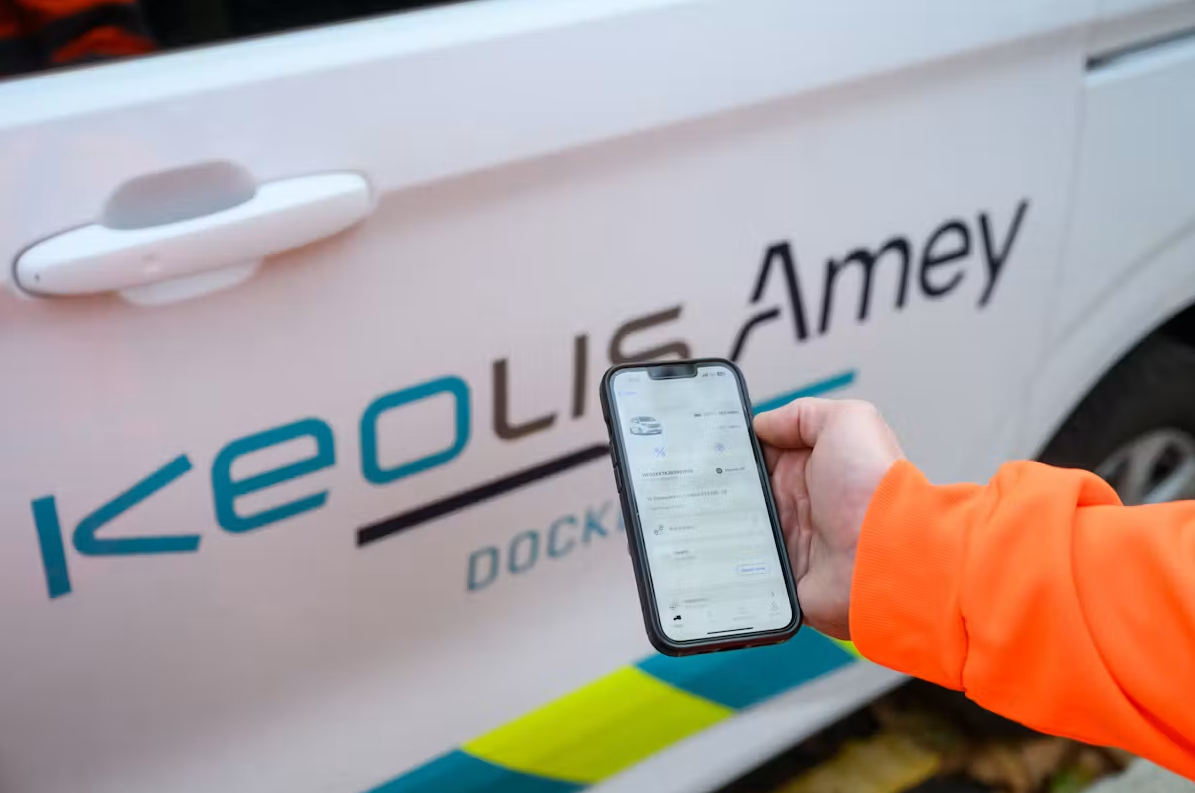
Railway operator KeolisAmey Docklands completed a comprehensive electrification program that illustrates achievable outcomes when organizations commit to systematic planning. The company approached the transition methodically, conducting thorough route analysis to ensure battery ranges matched operational requirements before committing to specific vehicle models.
After converting its entire light commercial vehicle fleet to electric in just eight months, the company documented significant environmental gains. The fleet reduced carbon dioxide by 2 tons within the first seven months compared to previous diesel operations.
Performance exceeded initial projections despite the relatively short measurement period, suggesting that long-term environmental benefits will prove even more substantial as operational efficiencies improve through experience.
The company also saw a 41% reduction in daily operating costs, driven by lower maintenance requirements and electricity expenses. Eliminating oil changes, transmission servicing and exhaust system repairs freed up maintenance staff for other duties while reducing vehicle downtime.
This case validates that well-executed transitions address both sustainability objectives and operational efficiency rather than requiring organizations to choose between environmental responsibility and fiscal prudence.
Charting a Sustainable Course for a Greener Fleet
The transition from internal combustion engines to EVs presents ecological challenges throughout the entire process. However, a truly sustainable outcome remains possible through proactive planning, responsible material sourcing and rigorous protocols for managing environmental contamination at every phase. Organizations that address these complexities systematically can meet sustainability goals without simply shifting burdens.
Frequently Asked Questions
What's the difference between brownfields and Superfund sites when it comes to EV charging depot development?
Brownfields are properties undergoing redevelopment after prior contamination from previous industrial use, and they're common — the U.S. currently has 450,000 of them. Superfund sites, by contrast, represent more severe pollution cases that directly threaten public health and ecological wellbeing. Many EV charging depots get sited on brownfields rather than Superfund land, since brownfield redevelopment can actually deliver economic benefits alongside environmental remediation — these projects have generated 183,817 jobs to date.
Why do EV batteries pose an environmental risk even though EVs reduce tailpipe emissions?
The battery life cycle creates contamination risks at both ends. On the front end, manufacturing is straining mineral supply chains — nickel demand is projected to reach 4.8 times current consumption and cobalt 6.7 times — and extraction affects watersheds and ecosystems well beyond the mining sites themselves. On the back end, most discarded lithium-ion batteries can ignite or explode if mishandled, which classifies them as hazardous waste requiring careful handling protocols.
How big is the looming problem of end-of-life EV batteries, and when will it hit?
Based on typical 10-year battery lifespans, the U.S. could see 2 million EV batteries reaching end-of-life annually by 2040 — roughly 4 million metric tons of material needing safe recycling or disposal each year. Fleet operators who build recycling and disposal plans now will be ahead of what's set to become a standard operational requirement across the industry.
Does fleet electrification actually pay off operationally, not just environmentally?
Yes — the KeolisAmey Docklands case study shows both can happen together. After converting its entire light commercial vehicle fleet to electric in eight months, the railway operator cut CO2 emissions by 2 tons within the first seven months versus its diesel operations, while also cutting daily operating costs by 41% thanks to lower maintenance and electricity expenses.